Research and development
We deliver research that is applied, community-connected, and policy relevant. We bridge humanities, health sciences, and built environment to address complex challenges in Sarawak, Malaysia, and the ASEAN region. Our Research and Development (R&D) Committee strengthens research quality, funding readiness, collaboration, and implementation ensuring evidence is transformed into sustainable action.
Message from the Chair of R&D
As Chair of Research and Development, my focus is to strengthen FoHHS as a hub for high-quality, interdisciplinary research with demonstrable impact. We support academics and Higher Degree by Research (HDR) candidates through strategic mentoring, internal peer review, targeted partnership development, and a clear pathway from research design to dissemination and implementation.
Our faculty’s strength lies in connecting evidence to action whether advancing media literacy and communication practices, supporting inclusive wellbeing across diverse communities, or improving the sustainability and performance of the built environment. I invite researchers, industry, government, and community partners to collaborate with us through our research clusters and our GlobeSync Community Research and Sustainability Hub (GlobeCoReS), where solutions are co-designed with stakeholders and scaled through knowledge exchange.
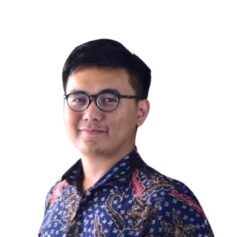
Dr Edza Aria Wikurendra
Chair of Research and Development
Research clusters
Our research is organised around three interconnected clusters that bridge people, place, and progress. Each cluster supports a pipeline from discovery to co-design to implementation, with GlobeCoReS providing a faculty-wide platform for community-based research, partnership building, and impact translation.

Media and communications
Focus areas are media studies, media literacy, social media and digital cultures, strategic and crisis communication, and community storytelling.
What we do:
- Analyse media ecosystems, information flows, and communication behaviours across diverse communities
- Develop and evaluate media literacy and misinformation resilience interventions for schools, organisations, and communities
- Support partners with communication strategy design and impact evaluation, including crisis and risk communication
Signature outputs:
- Evidence-based media literacy programmes and training modules
- Stakeholder toolkits and practice guidelines for responsible communication
- Peer-reviewed publications and policy briefs informed by local and regional case studies.

Sustainable built environment
Focus areas: Project and construction management, life cycle cost analysis, sustainable procurement, circular construction practices, Construction 4.0 (methods and systems).
What we do:
- Improve project performance, cost efficiency, and sustainability outcomes through life-cycle thinking and applied research
- Support industry and public-sector partners with evidence on delivery models, productivity, governance, and responsible resource use
- Develop adoption-ready guidance for sustainable construction practices and asset stewardship.
Signature outputs:
- Industry guidelines, SOPs, and benchmarking tools
- Lifecycle cost and value-for-money decision support for infrastructure planning
- Collaborative research outputs with demonstrators, pilots, and partner-led implementations.
Faculty engagement
We strengthen engagement by building industry partnerships, community outreach, and fostering collaboration that expands learning opportunities and enhances real-world impact.
Research event

Staff research profile
Contact and enquiries
Prof Dr Roy Rillera Marzo
Dean of Faculty of Humanities and Health Sciencest: +60 85 630100 Ext:2798
e: roy.marzo@curtin.edu.my
Dr Edza Aria Wikurendra
Chair of Research and Developmentt: +60 85 630100 Ext:2623
e: edzaaria@curtin.edu.my
Mr Terry Justin Dit
Head, Media and Communicationst: +60 85 630100 Ext:2605
e: terry.j@curtin.edu.my
Dr Noraisikin Sabani
Head, Social Inclusivity and Wellbeingt: +60 85 630100 Ext:2610
e: noraisikin.s@curtin.edu.my
Ir Meheron Selowara Joo
Head, Sustainable Built Environmentt: +60 85 630100 Ext:2433
e: meheron.sj@curtin.edu.my
GlobeCoRes Hub
t: +60 13 887 8683
e: secretariat.globecores@curtin.edu.my
Social inclusivity and wellbeing
Focus areas: Ageing and longevity, indigenous, cultural and heritage studies, education and human capital development, health sciences and overall wellbeing.
What we do:
Signature outputs: